
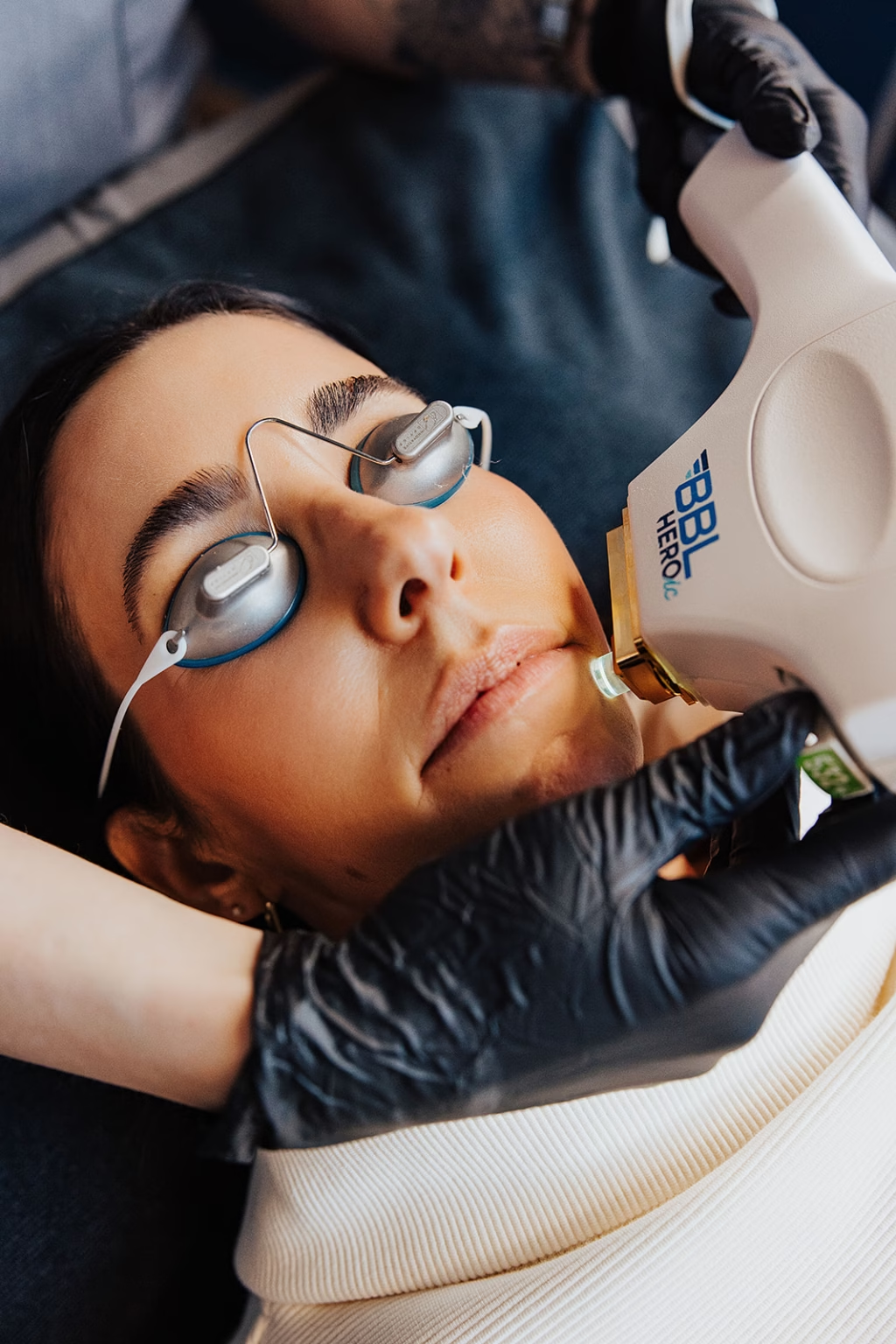
(And What You Can Actually Do About It)
At some point, many women begin to notice subtle shifts in their skin.
Maybe it feels thinner.
Less firm.
A little less “glowy” than it used to be.
If you’ve had that moment of wondering when did my skin change? — you’re not imagining it. And more importantly, it’s not just about getting older.
What’s happening is biological, predictable, and — to a certain extent — manageable.
The Role of Collagen (and Why It Matters)
After the age of 30, your body naturally begins producing less collagen.
Collagen is the protein that gives your skin its:
- Firmness
- Elasticity
- Structure
Most people lose about 1% of their collagen each year, and while that sounds slow, the effects do add up.
This is when you may start to notice:
- Fine lines that linger
- Skin that feels less “bouncy”
- Subtle laxity
- Changes in texture or tone
These shifts are completely normal — but they’re not random.
It’s Not Just Collagen Loss
Collagen decline is only part of the story.
Skin health is influenced by a combination of internal and external factors, including:
Hormones
Estrogen plays a major role in skin thickness, hydration, and elasticity. As levels fluctuate (especially during perimenopause), changes can accelerate.
Inflammation
Low-grade, chronic inflammation can interfere with your skin’s ability to repair and maintain itself.
Sun Exposure
Even small, repeated UV exposure over time contributes significantly to collagen breakdown.
Stress
Elevated cortisol levels can slow down collagen production and healing.
Why It Can Feel Sudden
A lot of patients say, “It feels like it happened overnight.”
In reality, these changes have been building gradually — they just become visible all at once.
For many women, this becomes more noticeable during perimenopause and menopause, when hormonal support shifts and skin can change more quickly.
What You Can Actually Do About It
The goal isn’t to “fight aging.” It’s to support your skin so it functions well over time.
Here’s what that can look like in a real, practical sense:
1. Treatments That Support Collagen Production
One of the most effective ways to maintain skin quality is to stimulate your body’s own collagen production.
A few treatments we often recommend:
RF Microneedling
Combines controlled micro-injury with radiofrequency energy to stimulate deeper collagen remodeling. Great for improving texture, firmness, and mild laxity.
Sculptra®
A biostimulator that works gradually over time to rebuild collagen. Results are subtle, progressive, and very natural-looking.
Radiesse®
Provides immediate structure while also stimulating collagen production over time. Often used for contouring and deeper support.
PRP Under Eye Treatment
Uses your body’s own platelet-rich plasma to improve under-eye texture, tone, and crepey skin while encouraging collagen production in a delicate area.
These treatments aren’t about quick fixes — they’re about building healthier skin over time.
2. Use Medical-Grade Skincare
Skincare should do more than just sit on the surface — it should actively support how your skin functions.
Some of our go-to products:
Alastin Retinols
Support cell turnover and collagen production while being formulated to minimize irritation.
Alastin Restorative Skin Complex
Helps improve elasticity and support the skin’s ability to clear out damaged collagen and elastin.
ZO® Skin Health Growth Factor Serum
Supports skin repair and helps improve the appearance of fine lines and overall skin quality.
ZO® Skin Health Exfoliation Accelerator
Encourages cellular turnover and helps smooth texture and brighten tone.
The key is consistency — and using the right combination for your skin.
3. Prioritize Daily SPF
If there’s one habit that truly makes a long-term difference, it’s this.
Daily SPF helps protect the collagen you already have.
Some of our favorites:
Alastin HydraTint Pro Mineral SPF
Lightly tinted, hydrating, and easy to wear daily — especially if you prefer something that blends seamlessly.
Epionce Daily Shield Tinted SPF
A great option for sheer coverage with strong sun protection.
ZO® Skin Health SPF Options
Multiple formulations depending on your skin type, finish preference, and lifestyle.
SPF isn’t just about preventing sunburn — it’s about protecting your investment in your skin.
A More Thoughtful Approach
It’s easy to feel like you need to do everything once you start noticing changes.
But more isn’t better — better is better.
The most effective approach is:
- Understanding what your skin actually needs
- Choosing treatments intentionally
- Supporting your skin consistently over time
When It Makes Sense to Get Guidance
If you’ve been noticing changes and aren’t sure what’s normal — or what’s worth addressing — that’s usually a good time to come in.
A consultation helps you:
- Understand what’s actually happening
- Avoid unnecessary treatments
- Build a plan that makes sense for you
Final Thought
Your skin isn’t “going downhill” — it’s just changing.
With the right approach, you can support those changes in a way that keeps your skin healthy, resilient, and looking like you.
If you’d like help figuring out where to start, we’re always here for that conversation.